US Equities: Ceasefire Rally Meets the AI Trade
S&P 500 up 10% MTD. The gap with Europe is widening. And it's not just geopolitics driving it.
Geopolitics: Tail Risk Eases
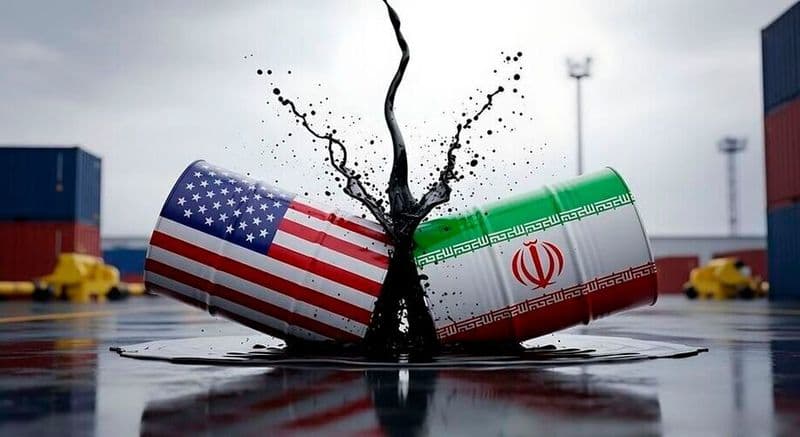
The US and Iran extended their ceasefire by three weeks, removing the near-term escalation scenario that had been weighing on markets. The recovery that began when conflict hopes first emerged has continued. The S&P 500 is now up 10% this month, outpacing Europe's Stoxx 600 (+5%) by the widest margin since June last year.
Part of the gap reflects structure, not just sentiment. As a net energy exporter, the US is meaningfully less sensitive to oil above $100/bbl than its European counterparts. Brent is +15% on the week at $105.88, but has yet to materially pressure US equities.
"This shock needs to run on for months and months before it poses the risk of a material fall in the US equity market." - Chief Market Strategist at hedge fund firm Marshall Wace
Tech & Semis: The Real Engine
The outperformance isn't just a relief rally. AI-driven tech is doing the heavy lifting.
Name | Performance |
|---|---|
SOX | +10%WTD/ +40% from Mar 30 trough |
Intel | +85% MTD |
Amazon | +25% MTD |
Sandisk | +320% YTD |
Western Digital | +140% YTD |
Meta, Microsoft, and Alphabet are all sitting on double-digit April gains. Memory names Sandisk and Western Digital are benefiting from a structural supply-demand imbalance, AI infrastructure buildout has pushed demand well ahead of supply.
Outlook
Goldman Sachs expects AI capex to lift S&P 500 EPS by 12% in 2026 and 10% in 2027, with a year-end SPX target of 7,600, implying 6% upside from current levels at 7,165.
The key risk is duration. A prolonged energy shock extending several months could start to weigh on corporate margins and consumer sentiment. That threshold hasn't been reached yet, but it's the variable to watch.
The Dim Sum Bonds Surge: Why Foreign Banks Are Borrowing in Renminbi
Offshore RMB issuance has more than doubled year-on-year. The yen's loss is Beijing's gain.
The Setup
Mainland Chinese yields are at historic lows, the 10-year CGB sits at 1.75%. That's left Chinese institutional investors yield-starved and pushing capital into Hong Kong's offshore market in search of higher returns. The result is a surge in demand for dim sum bonds: renminbi-denominated debt issued outside the mainland, predominantly in Hong Kong.
Total dim sum issuance has hit RMB 300bn ($44bn) YTD, more than double the same point in 2025, itself a record year.
Why Foreign Issuers Are Piling In
The arbitrage is clean. Goldman's 10-year dim sum bond carries a 3% coupon against 1.75% onshore, and still undercuts funding costs available in most other global markets. Proceeds are swapped into dollars and hedged, meaning the renminbi exposure is largely technical. Critically, offshore RMB raised in Hong Kong sits outside China's cross-border capital controls, making proceeds freely deployable across jurisdictions.
Why the Yen Matters Here
The yen has lost its carry-trade appeal. JGB 10-year yields have risen sharply to above 2.4%, up from 0.61% at the start of 2024, and Chinese 10-year yields fell below Japan's for the first time last November. The offshore renminbi is stepping into the vacuum as a global funding currency.
Beijing's Angle
This isn't incidental to Chinese policy, it's the point. By encouraging foreign issuers to borrow in renminbi, Beijing is simultaneously expanding the offshore RMB asset pool, promoting the currency as a global funding and reserve currency, and reducing reliance on the US dollar, all without opening its capital account. Most dim sum investors today are mainland Chinese, but growing foreign issuance is what turns the offshore RMB market into a credible international funding channel.
Japan: Structurally Exposed, Tactically Resilient
90% of crude imports from the Middle East. 250 days of strategic reserves. A complicated picture.
The Exposure
Japan's vulnerability to the current energy shock is structural, not incidental. Crude oil accounts for roughly 30% of total energy consumption, with approximately 90% of imports sourced from the Middle East, principally Saudi Arabia and the UAE. LNG supply is more geographically diversified, offering a partial offset, but the crude dependency is a hard constraint.
Japan sources more than 90% of its crude from the Middle East, among the highest concentrations of any developed economy.
This reality was reflected in the sharp equity sell-offs across Asia when the conflict began in late February, with Japan among the more affected markets in the region.
Why the Damage Has Been Contained
Several buffers have limited the impact so far. Oil prices have retreated from their early April highs, partly supported by flows through the Saudi East-West pipeline. Japan's 250 days of strategic oil reserves, one of the largest stockpiles among developed economies, provide meaningful runway. The government also moved quickly to reinstate gasoline subsidies, cushioning the consumer impact and limiting the equity drawdown relative to regional peers.
The BOJ, expected to hold rates at its meeting this week, is preserving optionality ahead of June as the inflationary effects of the energy shock become clearer.
The Structural Investment Case
Despite the near-term noise, the longer-term setup remains constructive.
Corporate governance reform is gaining traction, with a focus on shareholder returns driving a structural improvement in ROE across Japanese corporates. Real wage growth is recovering. Companies with pricing power are passing on higher input costs. Prime Minister Takaichi's decisive election majority has reduced policy uncertainty, with supportive fiscal policy directed at AI, defence, and shipbuilding, sectors well-positioned regardless of the conflict's trajectory. The Nikkei 225 is up 18% in dollar terms YTD, one of the best-performing major indices this year.
Risks to Watch
The Middle East conflict and its energy price impact remain the primary concern. Yen volatility adds another layer of uncertainty for foreign investors. A less-discussed but potentially significant risk is supply disruption in industrial materials (sulfur, helium, and related inputs) critical to Japanese manufacturing. Should disruption extend into the summer, industrial production could face capacity constraints with knock-on effects for global supply chains.
The base case, however, is recovery: a stable government, substantial reserves, renewed fiscal support, and a structurally improving corporate earnings cycle provide the platform once the macro environment stabilises.
What Markets Are Pricing In
The Fed, Big Tech earnings, and GDP all in the next 72 hours. Two questions will define the week.
Question 1: Will the Fed Signal a Shift?
March inflation came in hot, driven largely by higher energy prices. The labour market remains firm: 178,000 jobs added, unemployment ticking down to 4.3%. Taken together, the data makes a straightforward case for holding rates unchanged.
Attention will be on whether the Fed chair signals any softening in its forward guidance, or whether it doubles down on a higher-for-longer stance as it waits for the energy-driven inflation impulse to pass through. With the BOJ also navigating a rate decision this week under similar inflationary pressures, the contrast in central bank posture across major economies is itself a market variable.
Question 2: Is the AI Spend Beginning to Pay Off?
Amazon, Alphabet, Meta, and Microsoft all report Wednesday. Apple follows Thursday.
Hundreds of billions in AI infrastructure commitments have been made across these names in recent months. What investors are watching for is not just headline earnings, it is whether capex guidance is accelerating or moderating, and whether revenue from AI products is converting at a pace that justifies the scale of the buildout.
Weekly Market Snapshot
Indices
SPX: +0.55%
NDX: +2.37%
SOX: +10.02%
VIX: +7.04%
Treasuries
US 2Y: +2.18%
US 10Y: +1.31%
FX
USD/JPY: +0.46%
USD/CNH: +0.28%
Commodities
Brent: +15.25%
XAU/USD: -2.59%
On the Radar
Date | |
|---|---|
Monday 27/04 |
|
Tuesday 28/04 |
|
Wednesday 29/04 |
|
Thursday 30/04 |
|