The Beijing Summit: Taiwan, Trade, and the Hormuz Question
Two days of meetings. No breakthrough. But enough movement to matter.
What Was Agreed
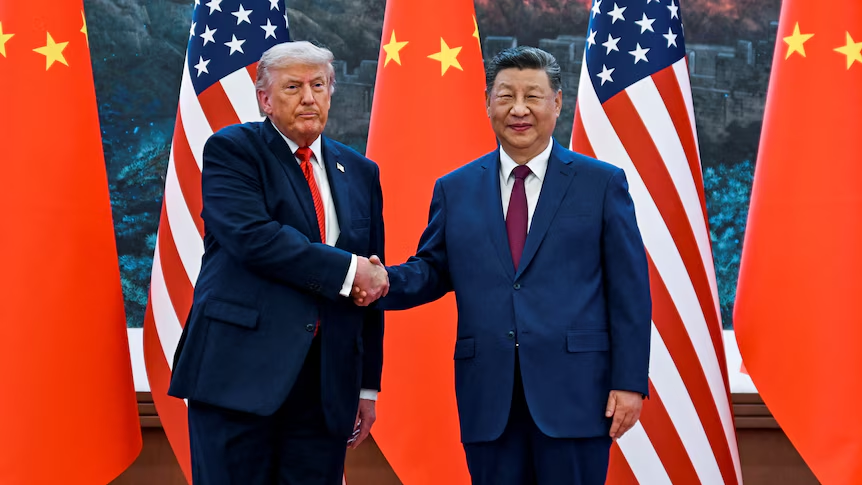
The Trump-Xi summit structured progress on trade but left the harder questions unresolved. The two sides agreed to establish boards of trade and investment, designating roughly $30 billion of non-sensitive Chinese goods for potential US tariff reductions, while exploring reciprocal market access for American companies in China. Xi also expressed interest in increasing Chinese purchases of US energy. Xi accepted Trump's invitation to visit the US in autumn as a sign of goodwill.
Neither side moved on the issues that actually define the relationship.
Taiwan: A Negotiating Chip, Not a Decision
Trump declined to confirm whether the US would proceed with a $14 billion arms package for Taiwan, including Patriot missile interceptors and advanced surface-to-air systems, that had already been delayed under Chinese pressure. His framing was explicit: "It depends on China. It's a very good negotiating chip for us, frankly." Xi warned him not to mishandle the Taiwan issue and restated his opposition to any declaration of independence.
The deliberate ambiguity is calculated. Arms sales to Taiwan are now a variable in the broader US-China negotiation rather than a standalone security commitment: a shift in posture that Taipei is watching closely and that markets have not yet fully priced into the Taiwan risk premium.
The Hormuz Angle
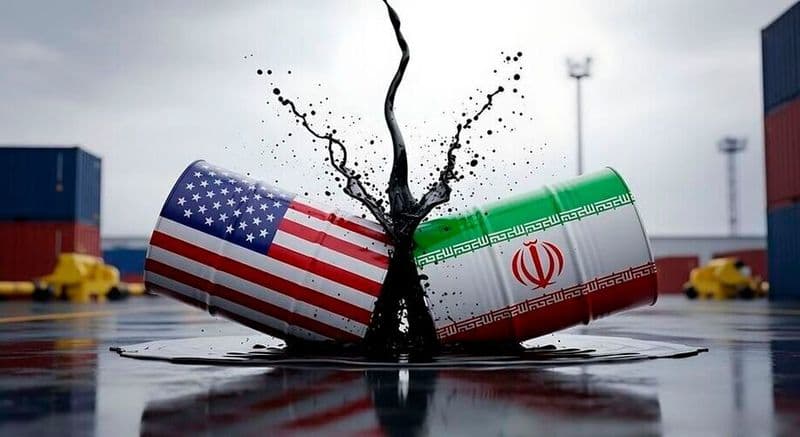
The more consequential question for markets was whether Beijing would use its leverage over Tehran to help reopen the strait. China is the world's largest oil importer, and roughly a third of its crude transits through Hormuz, giving it both the incentive and the influence to push for a resolution. Xi gave no formal commitment. But Iranian Revolutionary Guards reportedly authorized some Chinese vessels to transit the waterway as of Wednesday night at Beijing's request, a quiet signal that China is not entirely passive.
Trump said Xi "would like to be of help." The US and China agreed the strait should remain open, while Xi opposed its militarization and the imposition of tolls. That is the floor of what was achievable, a shared statement of interest rather than a mechanism for resolution. But the IRGC's selective passage decision suggests China is applying back-channel pressure without putting it on record.
Energy experts warned that without a Hormuz resolution by next month, critically depleted global reserves could trigger a broader wave of shortages and price increases.
US Inflation: 3.8% and the Number That Locks the Fed
The highest reading in three years. The first time in three years inflation has outstripped wage growth. And it is not just energy anymore.
The Print
April CPI came in at 3.8% year-on-year, above Wall Street expectations and up sharply from 3.3% in March and 2.4% in February. The driver is clear: petrol prices gained 28.4% year-on-year, airfares rose 20.7% on higher jet fuel costs, and food prices at the grocery store increased 2.9%, their fastest pace since 2023. Fruit and vegetables added 6.1%.
The detail that matters most for the Fed is that the inflationary effects are widening beyond energy. Core inflation, stripping out food and energy, edged up to 2.8% from 2.6%, driven partly by apparel and home furnishings. The energy shock is percolating into broader consumer prices in a way that the Fed cannot simply look through.
"In today's data, we were looking for whether high costs of energy are percolating to price increases in other sectors. And indeed, food and airline fares rose, as did some consumer products like apparel and home furnishings." - Moody
What It Means for the Fed
Rate cuts in 2026 are effectively off the table. The two-year Treasury yield briefly topped 4% for the first time in six weeks on the print before settling back to 3.99%. As Goldman Sachs Asset Management's Tim Urbanowicz noted, nothing in the data puts rate hikes back on the table either, but the window for cuts has closed entirely as long as oil stays above $100 and the inflationary pass-through continues.
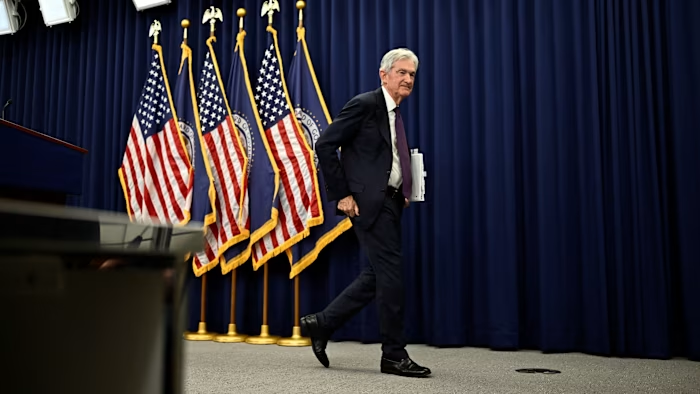
Kevin Warsh inherits this problem at his first meeting in June. He takes the chair with services inflation above target, energy-driven headline inflation accelerating, a divided committee, and a president demanding lower rates. The April CPI print removes whatever flexibility he might have hoped to walk in with.
View Forward
Three threads are now pulling on the same knot, and how they resolve over the next four to six weeks will define the second half of the year.
The inflation ceiling is being tested. At 3.8% and rising, headline CPI is no longer an energy story that the Fed can credibly look through. Core inflation is moving too. The market has priced out cuts. The more uncomfortable question being whispered in fixed income is whether the next move is up, not down. That is not the base case, but it is no longer an absurd tail risk if Brent holds above $105 and food prices increase. Warsh's tone at the June meeting will be the most scrutinized Fed communication in years.
Hormuz is the release valve for everything. An opening of the strait, not IRGC selective passage but full commercial transit, would move oil from $100 to $80-85 within weeks, immediately relieve consumer inflation pressure, reopen the rate cut conversation, and reprice European and Asian equities sharply higher. The Beijing summit did not deliver that, but it moved the needle. China has a clear economic interest in a resolution and appears to be applying quiet pressure. Whether that translates into Tehran changing its position before global reserves reach critical levels is the single most consequential unknown in markets right now.
The Taiwan risk premium is underpriced. Trump explicitly framing a $14 billion arms sale as a negotiating chip, contingent on China's behaviour, is a structural shift in how the US approaches Taiwan security commitments. Markets have treated Taiwan as a stable geopolitical variable for decades. The Beijing summit introduced ambiguity into that assumption in a way that will not be reversed quickly. Semiconductor supply chains, Taiwanese equity risk, and broader Indo-Pacific positioning all carry more uncertainty today than they did a week ago. This has not yet shown up in pricing in any meaningful way.
The base case remains: AI earnings momentum keeps US equities supported, the Fed holds, and a Hormuz resolution arrives before the reserve situation becomes critical.
Weekly Market Snapshot
Indices
SPX: +0.13%
NDX: -0.38%
SOX: -1.59%
VIX: +7.21%
Treasuries
US 2Y: +4.85%
US 10Y: +5.54%
FX
USD/JPY: +1.33%
USD/CNH: +0.27%
Commodities
Brent: +8.71%
XAU/USD: -3.75%